A guide to the livestock manure composting process
As profit margins in farming continue to shrink, it is increasingly important to diversify income streams and make better use of on-farm resources. One effective approach is to find value in the by-products of farming activities, turning what might otherwise be waste into an additional source of income or a reusable input. This is where manure becomes particularly valuable.
The livestock manure composting process has many benefits. Composted manure is good for the soil. It’s better than using chemical fertilizers or raw manure because it releases nutrients slowly. It helps fertility, bulk density, and increases the soil’s water retention capacity (Flavel and Murphy, 2006).
The high-temperature decomposition phase of manure composting helps eliminate flies and odours by destroying fly larvae and eggs during the process. The high temperature it reaches is also useful for killing weed seeds, which means you don’t need to use harmful herbicides. This helps protect crops and boosts productivity.
What type of manure can be composted?
- Goat manure
- Dairy cow manure
- Chicken litter
- Horse manure
How to start an animal manure compost pile?
- A concrete pad or a lime-stabilised area
Build long piles, called windrows, outdoors on a concrete surface or a firm area. Ensure there’s a slight slope for drainage, so leachate flows into a containment pond. Avoid placing sites near surface waters, on coarse soils, or in flood plains. Ideal sites are well-drained with slopes of 2-4%.
You can also compost under a roof or shed, using three-sided wooden bins. This allows you to move materials easily.
- Access to water
- Space for open windrows or piles
- An accessible area for easy pick-up and drop-off
How to maintain a cattle manure compost pile?
Carbon to nitrogen ratio, temperature, water or moisture, and oxygen are the factors that must be considered to maintain a manure windrow. These factors are interrelated, which means abnormal conditions in one factor can disturb other factors, significantly changing the composting conditions, and thus the quality and duration.
Carbon to Nitrogen Ratio (C/N) 3:1
Animal manure is green, meaning it is rich in nitrogen. To achieve a balanced carbon-to-nitrogen ratio for composting, make sure to add carbon-rich materials such as straw, sawdust, or wood shavings.
The carbon-to-nitrogen ratio should be 3 to 1. If the ratio drops below 2 to 1, nitrogen will be lost, leading to an increase in ammonia-like smells. An excessive carbon-to-nitrogen ratio of more than 4:1 will slow down the composting process. A balanced carbon-to-nitrogen mix speeds up composting and reduces ammonia smells. (Coyne and Thompson, 2006). Follow our windrow monitoring guide for the best results.
In the table below, you can find different carbon to nitrogen ration in various types of manure.
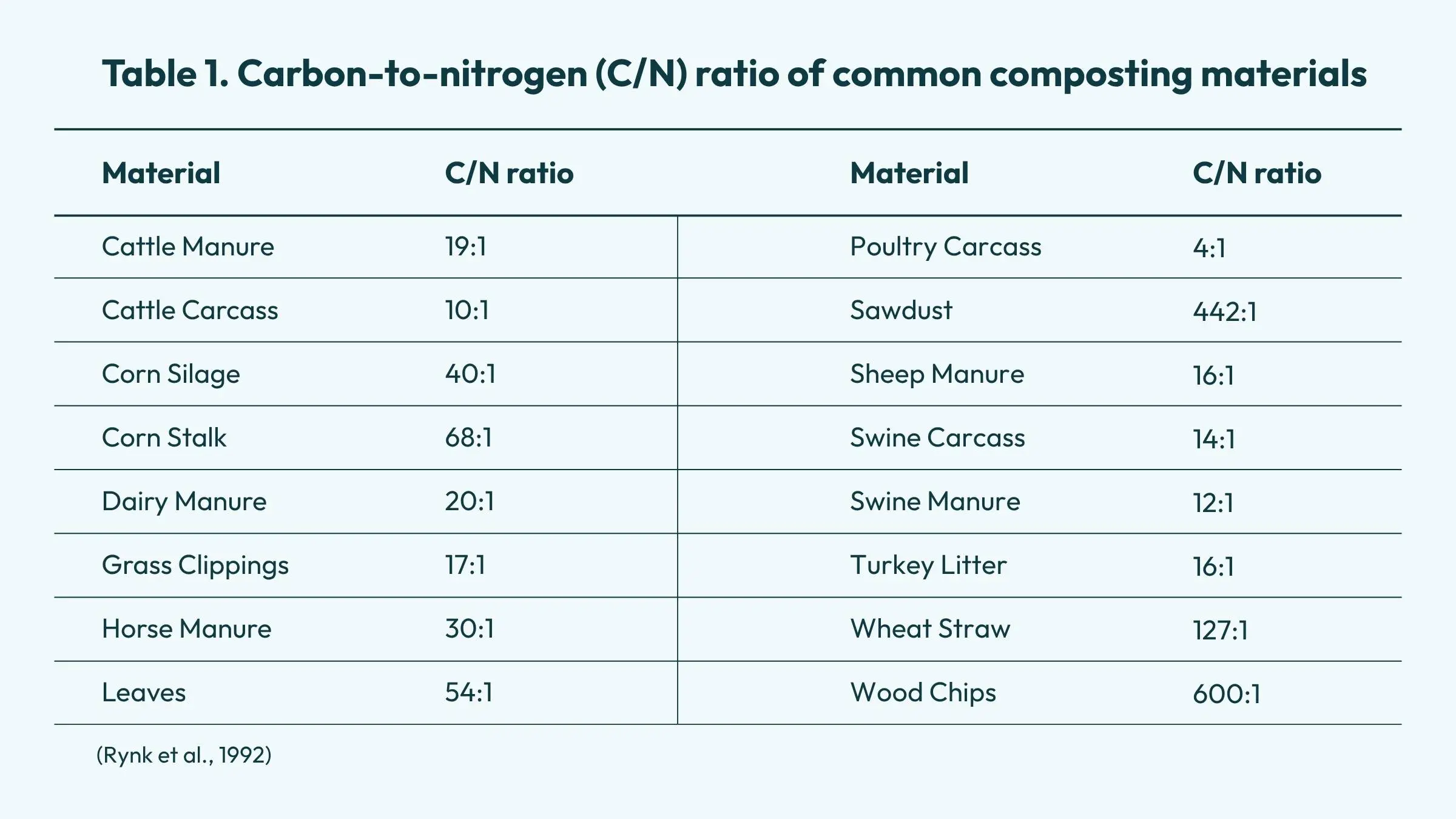
Source: Rynk et al., 1992: On farm composting handbook
Manure compost pile temperature monitoring
Organic operations must meet temperature and turning frequency standards. The Organic Materials Review Institute (2019) requires manure compost to reach temperatures of 55–77°C (131–170°F) for 15 days, with at least five turns in that period.
If the piles exceed 71°C (160°F), beneficial microbes may die, slowing the process. This often means too much nitrogen is present. Add carbon, make the piles smaller, or dig holes to cool them down.
Microbes heat the compost pile up to 71°C (160°F). Monitoring the temperature is crucial to kill seeds and diseases before applying to soil. Monitoring temperature also helps to prevent compost pile fire hazards.
Oxygen requirement for manure composting
Microorganisms that turn manure into compost require oxygen to perform temperature-driven reactions. Less than 5% of oxygen in a pore space can make the process aerobic and slow the composting process and generate a rotten egg smell. Turning can improve the oxygen level and reduce odors. Pore space refers to the space that is not filled with composting materials, allowing oxygen and moisture.
Water requirement
The pore space in composting material should have 40-60% of water. Maintain about 50% water in the pore space. Moisture can be tested with a moisture meter or hand squeeze test. Ambient temperature conditions also affect moisture level in the windrow.
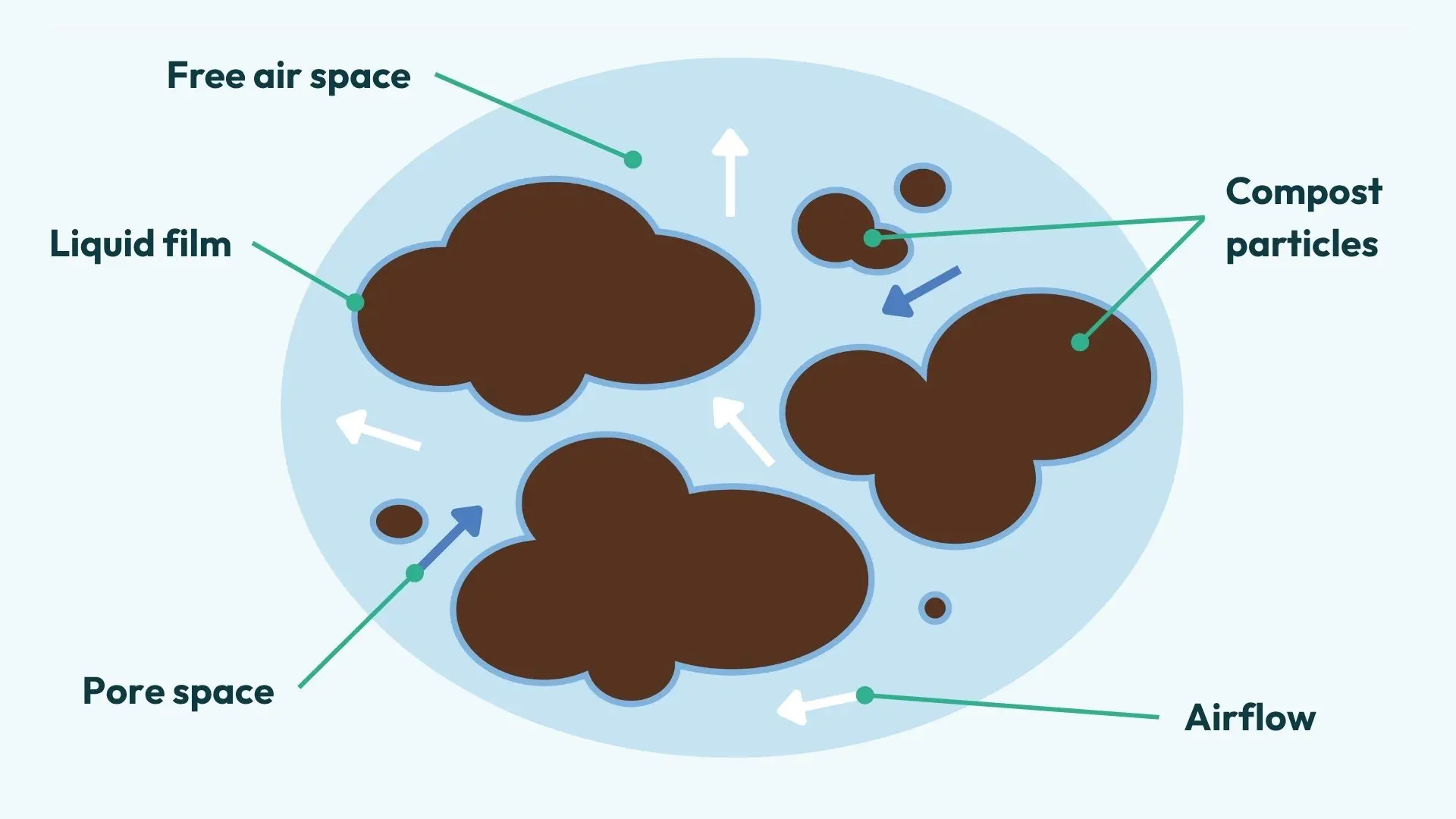
Image source: https://www.lsuagcenter.com/
How often should I turn the livestock manure compost windrows?
According to Michel (2009), turn compost windrows every 10 to 14 days. This reduces labour while ensuring quality. More frequent turning improves compost quality. It introduces oxygen for microbes and mixes outer layers into the pile, where most decomposition occurs.
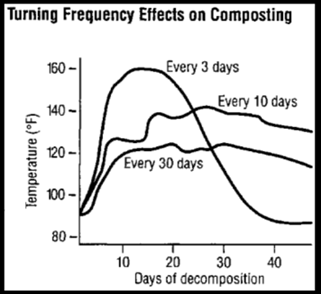
Image source: https://www.lsuagcenter.com/
What are the benefits of turning animal manure windrows?
Turning windrows introduces oxygen, breaks up clumps, and mixes the compost evenly. Use a turner or bucket tractor for turning manure windrows. A turner can be self-propelled or attached to a tractor. Choose a turner based on the amount of manure. Smaller operations may only need a bucket tractor.
How to select a turner for compost windrows?
Measure your windrow dimensions. Windrow turners vary from 6 to 20 feet wide. A 10-foot turner can process 1,500 yards per hour, while a 14-foot turner can handle 2,600 yards. Equipment running a turner should have a creeper gear to run at 20 feet per minute.
How to assess livestock manure compost maturity?
Check the compost temperature to ensure it is near ambient levels. Alternatively, send samples to labs for ammonia and carbon dioxide testing. After heating cycles, pile the manure compost for at least a month before land application. Using immature compost can cause bad smells, insect problems, nitrogen immobilisation, and phytotoxicity.
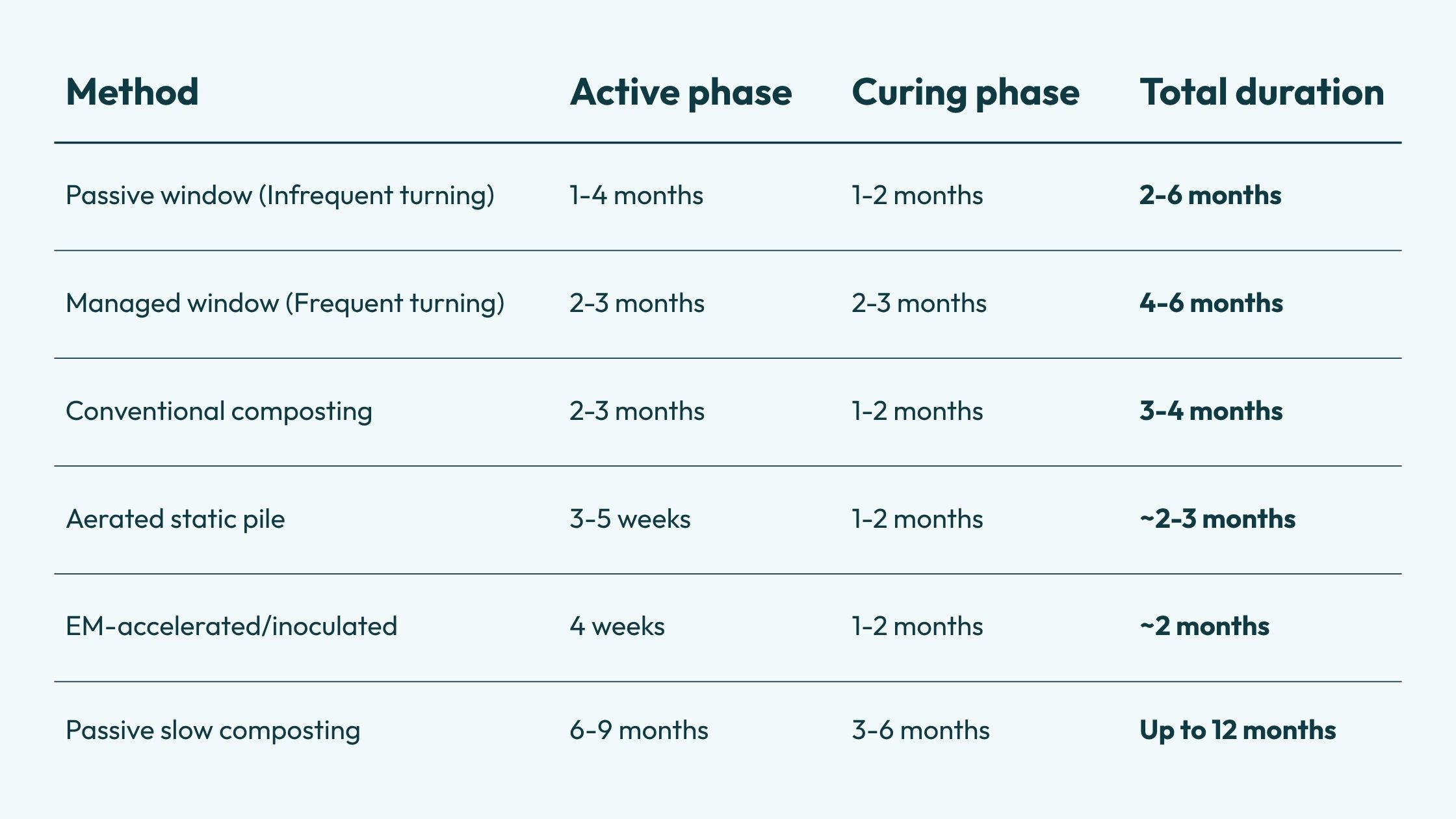
How long does it take to process animal manure for compost?
Processing time varies widely based on method, manure type, management, and environmental factors. Estimates range from 3–4 weeks under optimal conditions to 6–12 months for slower methods.
Why is composted manure fertilizer better than chemical fertilizers?
Manure improves soil organic matter, microbial activity, and water retention in ways that chemical fertilizers cannot. Chemical fertilizers do not add organic matter and can lead to soil degradation and erosion. A 3-year study showed manure reduced global warming potential by 36.2% compared to chemical fertilizers, with lower N₂O emissions and no significant yield loss.
Is chicken manure green or brown compost?
Chicken manure is a green compost material due to its high nitrogen content. Though visually brown, it’s classified as green in composting. Coop bedding, like straw or wood shavings, is the brown (carbon) component.
Is manure compost or fertilizer?
Manure can be both, based on its usage:
- As Fertilizer: Fresh manure adds nutrients directly to soil but can harm plants if over-applied.
- As Compost: When mixed with carbon materials and aged, it becomes compost. A stable, nutrient-rich soil amendment.
The main difference is processing: fresh manure is a fertilizer; aged or composted manure is compost. Many gardeners compost first for safety and stability before applying it to soil.
References:
- Coyne, M.S., and J.A. Thompson. 2006. Math for soil scientists. p. 176-190 and 199-208. Thomson Delmar Learning, Clifton Park, N.Y.
- Organic Materials Review Institute. 2019. Compost Standards. https://www.omri.org/compost-standards.
- Michel, F.C. Jr. 2009. On farm-scale composting. Midwest manure summit, Green Bay, Wis. March 24-25, 2009.
- Flavel, T.C., and D.V. Murphy. 2006. Carbon and nitrogen mineralization rates after application of organic amendments to
soil. J. Environ. Qual. 35:183-193. - Rynk, R., M. van de Kamp, G.B. Willson, M.E. Singley, T.L. Richard, J.J. Kolega, F.R. Gouin, L. Laliberty Jr., D. Kay, D.W. Murphy, H.A.J.Hoitink and W.F. Brinton. 1992. On-Farm composting handbook. (ed). R. Rynk. p. 6-13, 106-113. Northeast Regional Agricultural Engineering Service, Ithaca, N.Y
- https://www.ndsu.edu/agriculture/sites/default/files/2022-03/nm1478.pdf