
Compost ventilation control system
Automate and monitor compost windrow aeration from anywhere. Cut energy costs.
What is the RC12 compost ventilation control system?
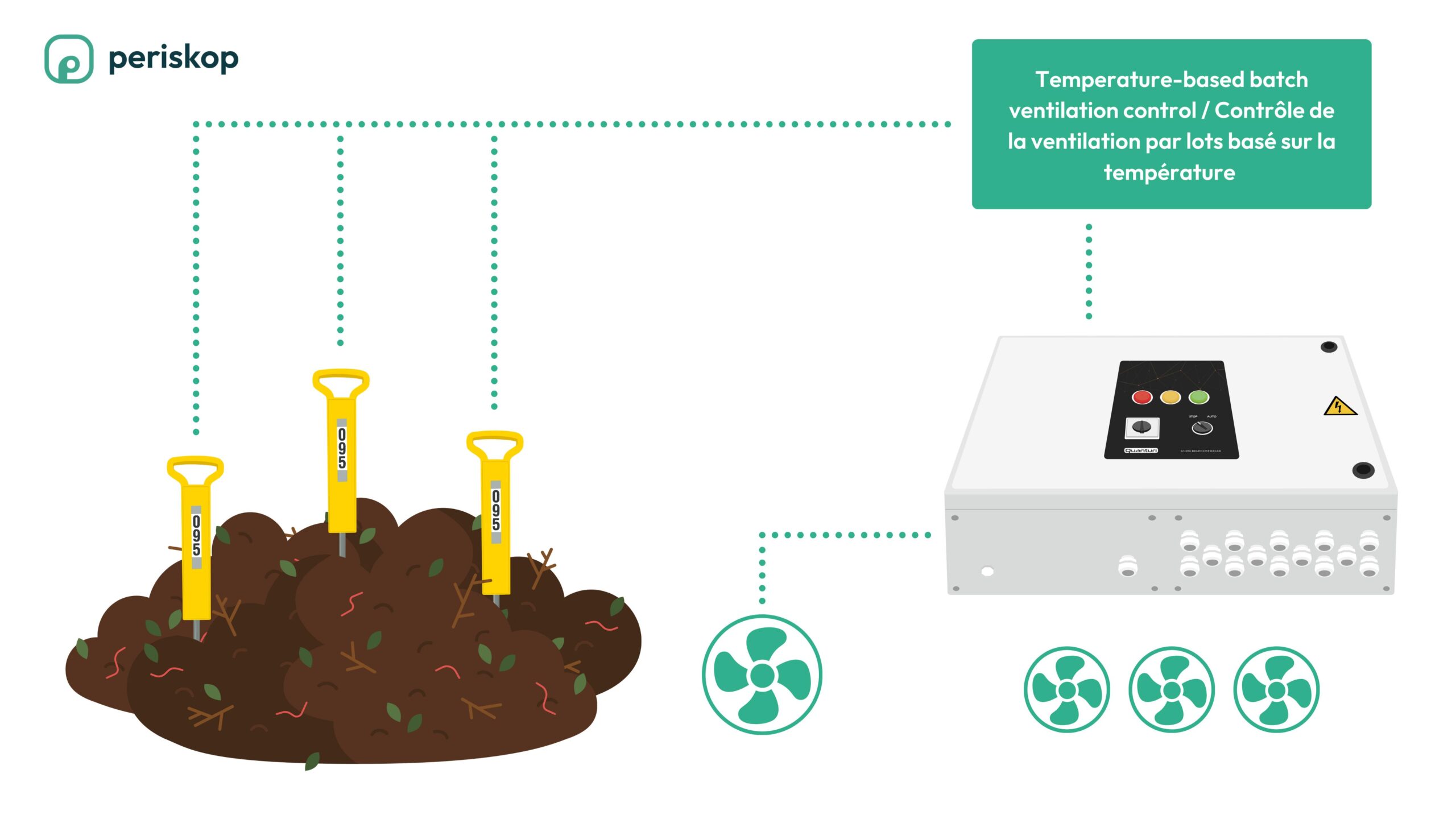
The RC12 is a smart aeration controller designed for composting facilities. It automates and optimizes the ventilation of aerated composting windrows.
What it controls
Rather than someone manually turning blowers on and off or adjusting airflow by feel, the RC12 remotely manages each ventilation line in a facility. Every windrow can be treated according to its own needs at that moment.
What it's solving
The RC12 combines multiple aeration strategies to keep piles in their optimal temperature range. Too hot, and you risk killing off beneficial microbes or even fire risk; too cool, and the process slows down or stalls.
How you can use it
It has a user-friendly interface with data synchronization, so you can monitor and control ventilation across the whole site from one place. Useful whether you’re on-site or checking in remotely.
Who it's for
It’s built to work in both new facility builds and existing operations, so it’s meant to be an upgrade rather than requiring a redesign of your setup.
RC 12 compost ventilation controller features
Reduce energy costs
Automate your ventilation strategy based on your electricity contract’s peak and off-peak pricing periods.
Remote access
Control and monitor your system from anywhere using a user-friendy application.
Individual fan control
Precisely manage each fan to ensure optimal oxygenation and rapid temperature target achievement.
Fire safety
Automatically cool the windrow to prevent fire through continuous ventilation until a safe temperature is reached in case of a runaway composting process.
Temperature controlled ventilation
Set temperature targets, define ventilation cycles tailored to the compost composition, and take into account adverse weather conditions.
How does the RC12 manage compost ventilation?
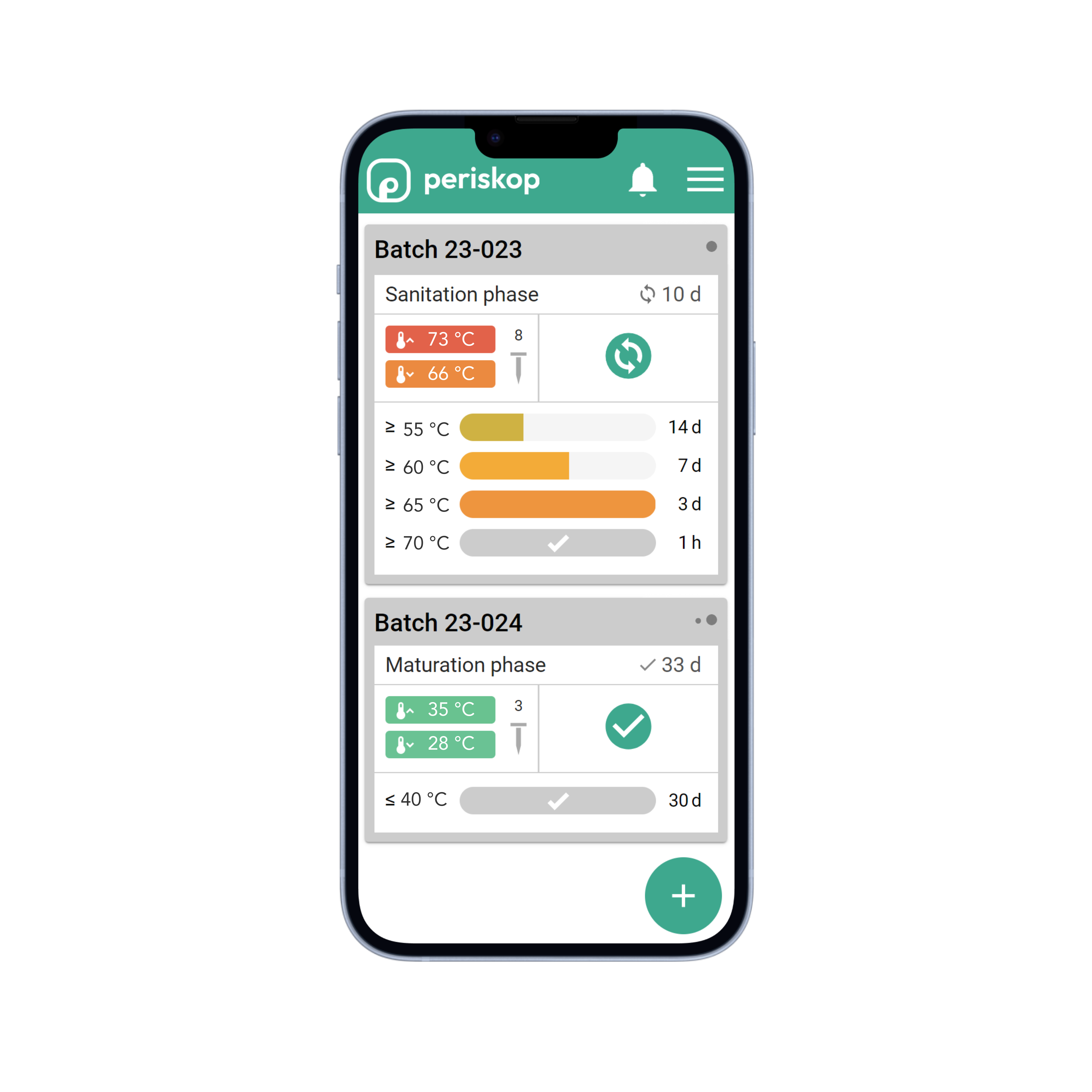
The Relay Controller regulates compost ventilation by adjusting airflow according to the batch temperature. For instance, during the sanitation phase, ventilation helps heat the compost, while in the maturation phase, it aids in cooling. This process continues until the temperature-time targets for each phase (e.g., ≥ 60°C for 24 hours) are achieved.
What are ventilation cycles in RC controller?
In RC12 ventilation runs in cycles with a set duration to address specific heating or cooling requirements by adjusting the cycle parameters. Each cycle includes a total duration and a designated active ventilation time within that period. Cycle lengths can range from 10 to 60 minutes, with the ventilation time adjustable from 0 (no ventilation) to the full cycle length (continuous ventilation).
Optimal ventilation cycles are determined by the process phase (heating or cooling) and the current batch temperature. For example, during the sanitation phase, when ventilation is used to heat the batch, less ventilation is required as the batch temperature rises.
How does the RC12 compost ventilation system help lower energy costs?
The RC12 compost ventilation system helps reduce energy costs by optimizing airflow based on the specific heating or cooling needs of the compost batch. Operating ventilation fans consumes electricity, and the associated costs can vary greatly depending on the season and time of day. With the help of the RC12 compost ventilation controller, ventilation cycles can be set in three different modes.
- Normal ventilation for regular hours
- Light ventilation for expensive hours
- No ventilation for the most expensive peak hours
The Periskop RC12 allows automation of the ventilation through a monthly and hourly scheduling program.
Do you have a question about the Periskop RC 12 Controller?
What exactly does the RC12 do?
It’s a smart controller that automates ventilation across your composting windrows, remotely managing each aeration line to keep temperatures in the optimal range without constant manual adjustment.
How is this different from just running blowers on a timer?
A timer runs regardless of what’s actually happening in the pile. The RC12 combines multiple aeration strategies to respond to real conditions in each windrow, so air only gets pushed when and where it’s needed, which is what drives both the quality and cost benefits.
Will it actually save us money?
Yes, by avoiding unnecessary blower runtime, energy costs drop compared to fixed-schedule or fully manual ventilation. The exact savings depend on your facility size and current setup, but the principle is straightforward: less wasted airflow means less wasted electricity. In addition, based on your electricity contract, you can adjust the fan running time in peak and off-peak hours.
How does it help with compost quality?
Temperature control is one of the biggest levers for compost quality. By keeping windrows consistently in their optimal range rather than letting them drift, piles reach stable, finished compost faster.
Is it safe? What about overheating?
The RC12 actively works to prevent piles from reaching the dangerous temperature extremes, which protects both your product and your facility. You will also receive an alert if temperature exceeds the pre-set limit.
Do we need to be on-site to monitor it?
No. The interface and data synchronization let you monitor and control ventilation remotely, so you can check in and make adjustments from anywhere.
Is the interface hard to learn?
It’s designed to be user-friendly. You don’t need specialized technical training to monitor windrows, check data, or make adjustments.
Can it manage multiple windrows at once?
Yes. Each ventilation line is managed independently, so different windrows at different stages of composting can each get the aeration they specifically need.
Will it work with our existing facility, or do we need to rebuild?
The RC12 is built to integrate into existing operations as easily as it fits into new builds. It’s meant to be an upgrade, not a redesign.
How long does it take to see results after installing it?
Since the RC12 improves temperature control from the moment it’s running, facilities typically see faster progress toward finished compost fairly quickly, with energy savings showing up over the following billing cycles
Who is the RC12 best suited for?
Both new and established composting operations are looking to reduce manual labor, compliance management, cut energy costs, and get more consistent, higher-quality output from their windrows.