How to Monitor the Compost Pile Temperature with probes?
Monitoring compost pile temperature is a critical factor in decomposition, microbial activity, and compliance with environmental standards. Temperature directly reflects microbial performance: if it is too low, microbial activity slows down; if it is too high, beneficial microbes die off, leading to poor-quality compost. Studies emphasize that continuous monitoring of temperature and moisture is essential for producing high-quality compost products (Luo et al., 2008; Tiquia et al., 1996).
There are two primary methods for monitoring compost pile temperature:
Method 1: Use a Smart Digital Compost Monitoring System
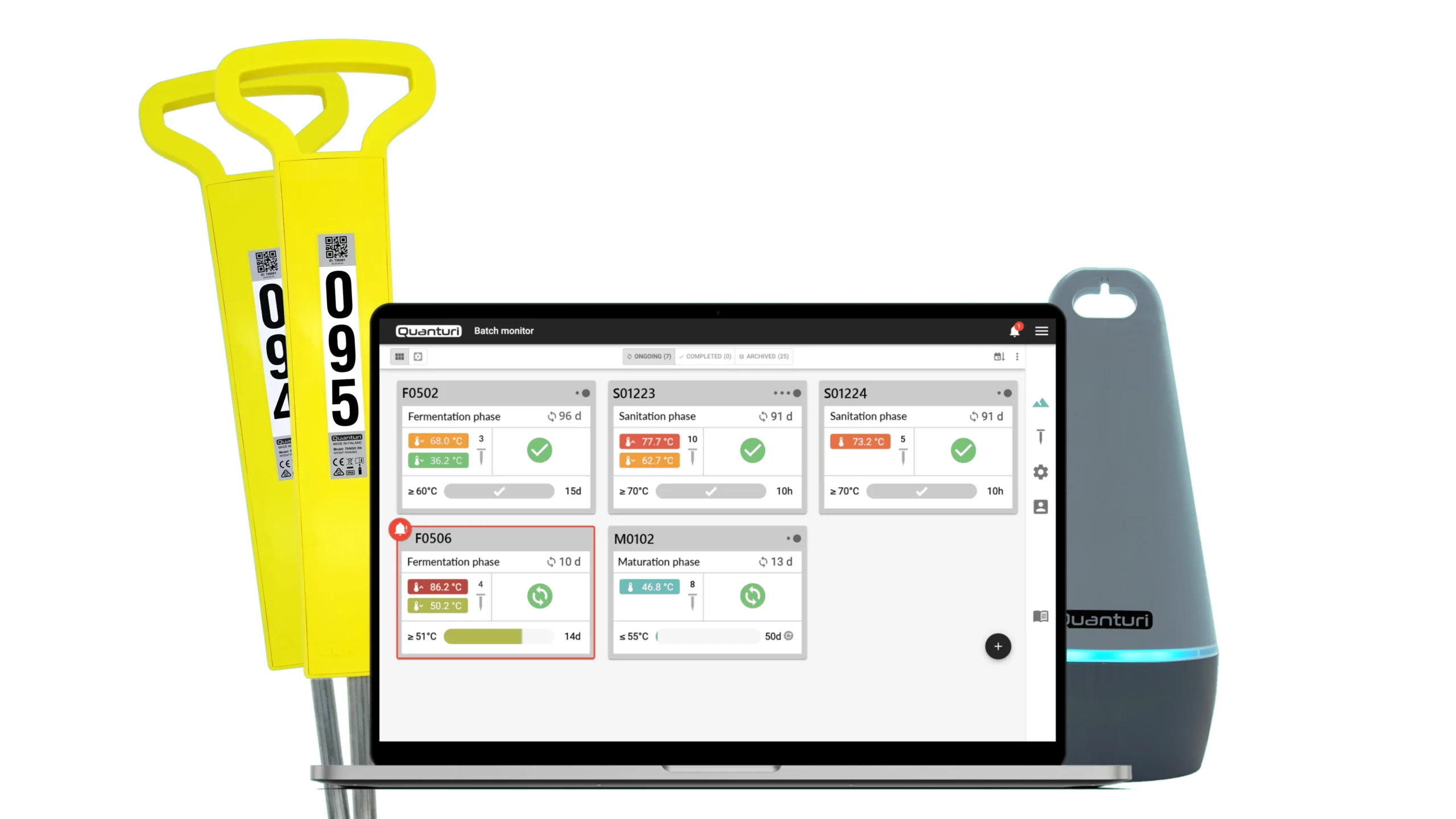
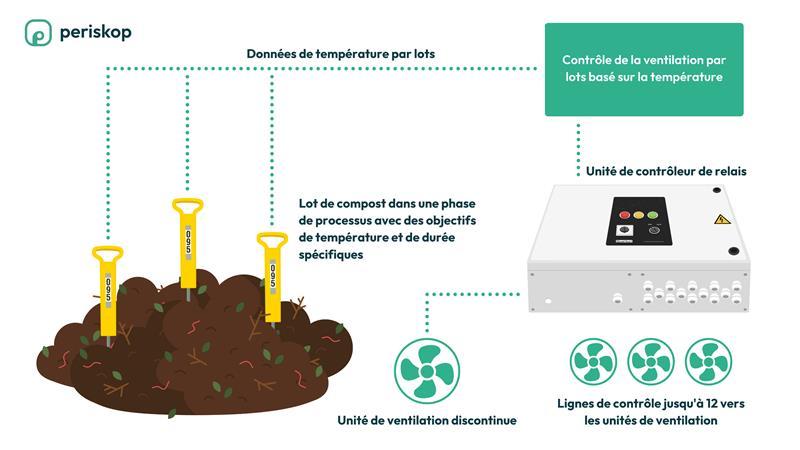
A smart compost monitoring system relies on wireless sensor networks (WSN), such as the Periskop system. These systems use encapsulated sensors inserted into the compost pile to continuously measure temperature. Data is transmitted wirelessly to a central hub for analysis.
Key advantages include:
- Continuous monitoring: Probes send automatic readings to your laptop, mobile phone, or tablet.
- Data visualization: View historical temperature graphs without manual logging in each phase.
- Custom alerts: Set thresholds to receive SMS, call, or email notifications if the temperature falls outside the optimal range.
- Compliance & reporting: Generate PDF reports for each composting stage to ensure regulatory compliance.
- User management: Assign monitoring tasks across staff in commercial composting facilities.
- Automation: Control aeration or ventilation remotely to optimize microbial conditions.
Research trials across 7 countries and 10 composting facilities confirmed that smart compost monitoring systems reduce manual labor, minimize exposure to pathogens, and improve decision-making during the composting process (López et al., 2014).
Resource link: Check out the Quanturi Periskop compost monitoring system for automated compost temperature monitoring.
Method 2: Manual Probes or thermometers
Manual monitoring with compost thermometers or probes is the traditional approach. While cost-effective, it is labor-intensive and less reliable. According to survey data from European composting facilities, almost half of composters still rely on manual measurements, typically at one location and limited depths (López et al., 2014).
Steps:
- Insert a compost probe deep into the pile and leave it until the reading stabilizes.
- Measure temperatures at multiple depths (center and surface) to capture variations caused by uneven moisture and chemical composition.
- Record readings and create a temperature graph to track composting phases.
Limitations:
- Requires frequent calibration.
- Risk of inaccurate readings due to uneven pile conditions.
- Manual data logging is time-consuming and prone to human error.
Despite these drawbacks, manual probes remain useful for small-scale composting operations.
How to monitor compost pile temperature with smart temperature probes?
Ever wondered how to monitor compost windrows temperature? smart compost temperature probes help you monitor the temperature deep inside any compost pile. For example, in a 3-meter-high compost window, you’d need about one meter of probe to monitor its temperature from the centre. This ensures you get accurate temperature readings throughout the windrow.
Short probes lack the depth needed to provide precise temperature readings for large compost windrows. Lacking enough temperature information could cause you to make mistakes when deciding the best time to turn the compost pile. This can make composting cost more and make the process slower.

Periskop long compost windrow monitoring probes are perfect for industrial composting. They come in one-meter and two-meter lengths, are completely wireless, and packed with useful features. In compliance with composting regulations across many countries, it’s recommended to monitor temperatures within compost windrows ranging from 70 cm to 150 cm in depth.
For windrows exceeding 3 meters in height, authorities require temperature measurements at the centre. For those managing large compost windrows (1-3 or 2-3) meters in industrial composting, Periskop long compost temperature probes with temperature alert application are the go-to solution, ensuring compliance with the guidelines and effective management of composting processes.
How do Periskop monitoring probes work with a smart system work?
- These probes are equipped with two temperature sensors, strategically positioned in the handle and at the bottom tip of the spike. Designed for convenience, the long stem temperature probes efficiently monitor the temperature of your compost windrows.
- This data is then seamlessly transmitted to the base station, that transmit data to a cloud base application
- Base stations transmit temperature data to a cloud base application, from where you can manage all of your composting process and set temperature alerts in case of abnormality. Compost temperature monitoring application enables you to generate data reports of the entire composting process.
Features of Periskop long compost temperature monitoring probes
- Temperature Range: 0°C to 100°C
- Wireless cloud base technology: Connects to cloud-based software, which gives you all temperature data
- Reading Distance: Up to 200 meters from base station to probe; extended length is also possible
- Battery Life: Up to 3 years, making it the most trusted, robust, low-maintenance compost monitoring probe on the market
- Corrosion Resistance: Ability to withstand hazardous materials
- Easy Visibility: Probes feature yellow handles for easy spotting and retrieval from compost
- No manual calibration required.
References:
- Green, O., et al. (2009). Monitoring and modeling temperature variations inside silage stacks using novel wireless sensor networks. Computers and Electronics in Agriculture.
- Luo, W., et al. (2008). Effect of moisture adjustments on vertical temperature distribution during forced-aeration static-pile composting of sewage sludge. Bioresource Technology.
- Tiquia, S.M., et al. (1996). Microbial activities during composting of spent pig-manure sawdust litter at different moisture contents. Bioresource Technology.
- Puyuelo, B., et al. (2010). A new control strategy for the composting process based on the oxygen uptake rate. Chemical Engineering Journal.
- European Commission (1999). Council Directive 1999/31/EC on the landfill of waste.
- European Commission (2008). Directive 2008/98/EC on waste and repealing certain Directives.
- López, F., et al. (2014). Wireless sensor networks for temperature and moisture monitoring in composting processes: Waste Management.