Compost Quality Assurance Process in Germany

Compost compliance Management Organizations in Germany
The Bundesgütegemeinschaft Kompost (BGK)
Regional Associations
Regional Gütegemeinschaften are local member associations that support compost producers on the ground. They:
- Advise members to meet quality standards.
- Coordinate sampling, inspections, and local monitoring.
- Handle regional membership administration.
They work under the BGK, which:
- Defines the national RAL quality standards for compost.
- Issues the official certification.
- Overseas national quality management.
In short, regional associations implement and support BGK rules locally, while BGK sets the standards and grants certification. We are member of Kompost Ost (east) , member of VHE and VHE-Nord associations in Germany.
How Bundesgütegemeinschaft Kompost (BGK) Quality Assurance Process Works
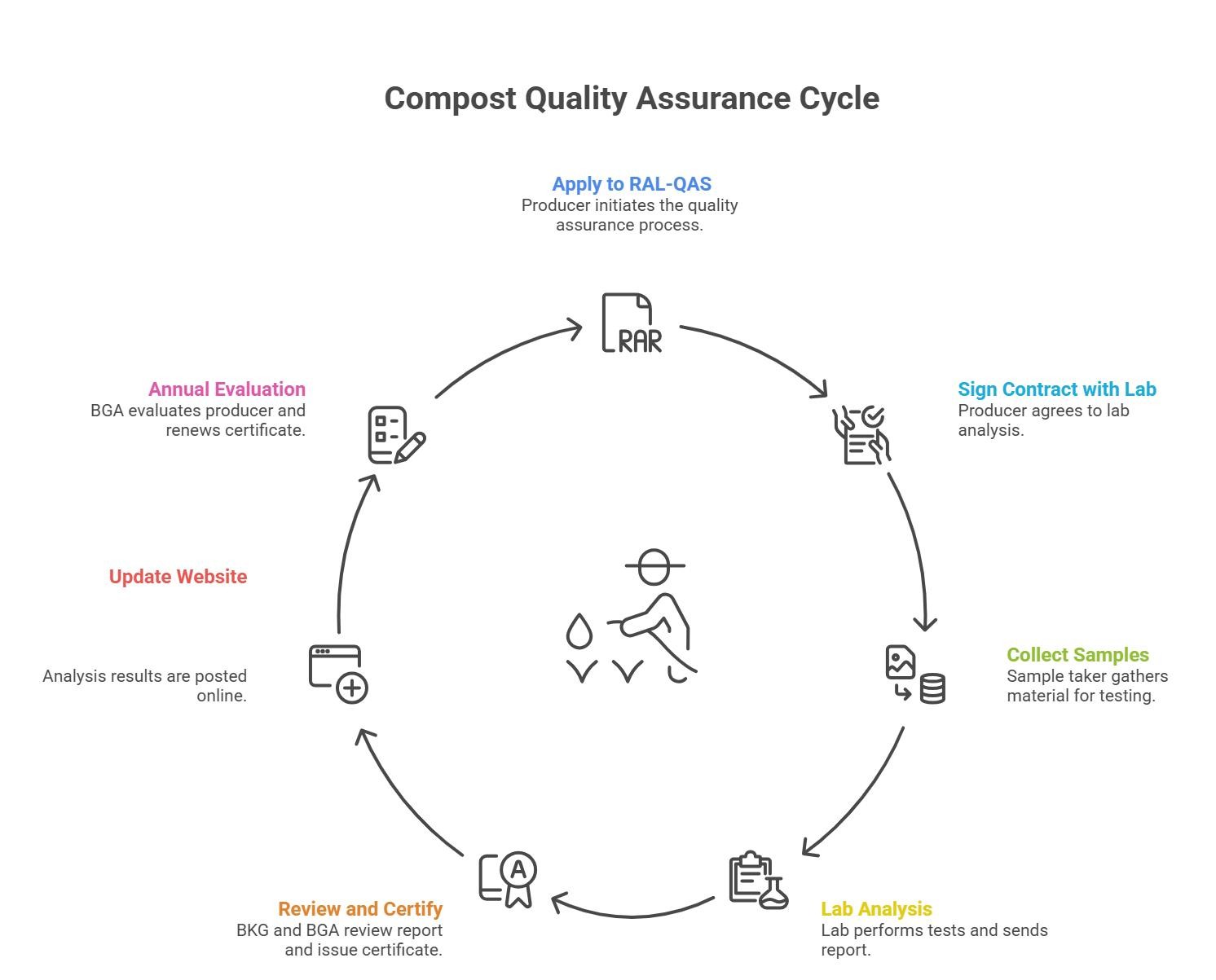
- Producer/Plant Operator applies to join the Quality Assurance Process (RAL-QAS).
- They sign a contract for analysis with an approved lab.
- A sample taker collects material samples and sends them to the approved lab.
- The lab performs tests and sends a report to the ZAS-Lab database.
- The BKG Quality Assurance Organization and BGA Quality Committee review the report and issue a Quality Label Certificate if the product meets the standards.
- The analysis results are updated monthly on the BGK website for transparency.
- Twice a year, the BGA evaluates everything, and the producer gets a certificate annually if they continue to meet the requirements.
How the Periskop System Supports Compliance Management in Germany
Hygienization Monitoring
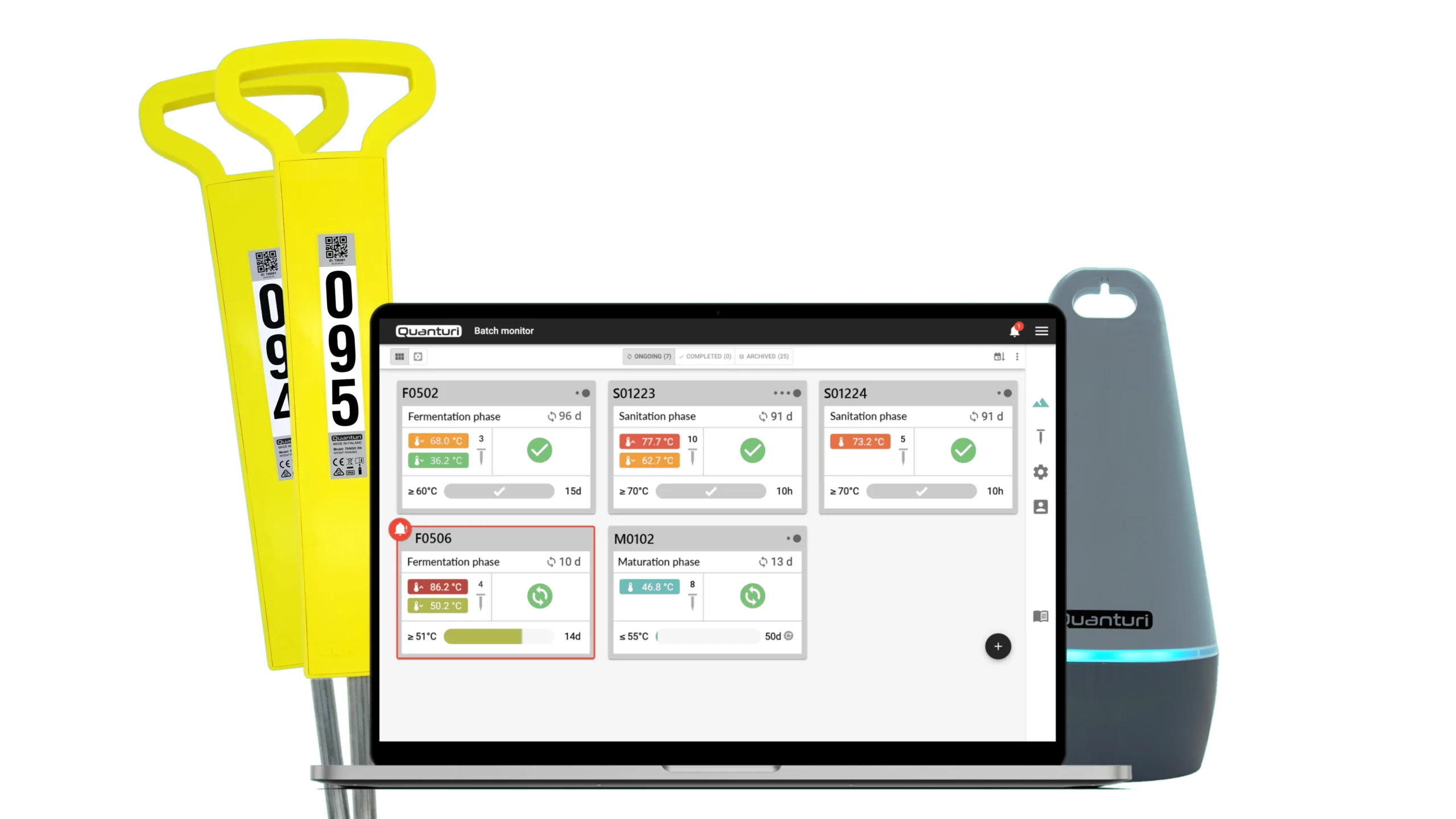
The Periskop system continuously tracks compost temperatures with long stem temperature probes, ensuring temperature requirements are met and generate downloadable reports for compliance audits from hygienization phase to maturation.
Digital Documentation
All process data is securely stored with time stamps, simplifying compliance documentation for RAL certification and BioAbfV requirements.
Process Stability
Continuous monitoring maintains stable composting conditions, improving decomposition consistency and ensuring RAL-GZ 251 quality standards.
Temperature Alerts
Automatic alerts notify operators of temperature deviations (High and low), preventing composting fires due to spontaneous combustion, non-compliant batches and reducing reprocessing or certification delays.
Aeration Control
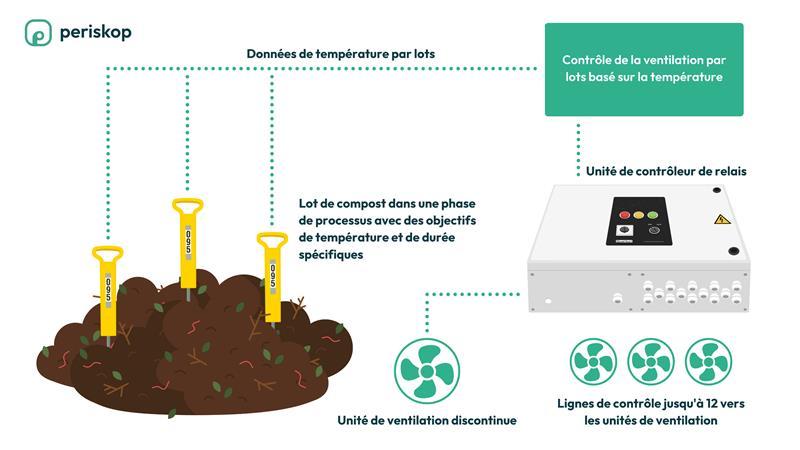
The Periskop ventilation control module precisely controls airflow through the compost, ensuring optimal microbial activity. By regulating aeration automatically, it prevents anaerobic zones, reduces odor, and accelerates decomposition.
RAL GZ 251 – Quality Label Guidelines for Composting
To ensure the composting process is hygienically safe:
Hygiene (Hygienization Test – Konformitätsprüfung)
- The Konformitätsprüfung (Conformity Test) must prove that the composting process effectively destroys harmful organisms (pathogens, weed seeds, etc.).
- The composting process must meet time temperature requirements this means the compost must stay hot enough for long enough to ensure sanitation. The Quanturi system allows wireless, continuous compost temperature monitoring, records upper and lower ranges with alerts, and provides downloadable reports to ensure sanitization temperatures meet RAL standards.
- No seeds or sprouting plant parts are allowed. Compost is considered free if there are fewer than 2 plants per liter.
- Salmonellae must be absent in all tested compost samples.
Impurities (Foreign Materials)
- Total impurities must be less than 0.5% of dry matter.
- Unwanted pieces (plastic, metal, glass, etc.) larger than 2 mm must be minimized.
- The total surface area of impurities should be less than 25 cm² per liter of compost.
If impurities exceed 0.1% (dry weight), they must remain under the above surface area limit.
Stones
Stones larger than 10 mm must make up no more than 5% by weight of the compost.
Decomposition Degree
Compost should be at degree II or III meaning it’s still biologically active but already partly matured (fresh compost stage).
Water Content
- For bulky composts, water content should not exceed 45% by weight in loose materials. In bagged materials it should be no greater than 35%.
- If the compost contains more than 40% organic matter, a higher water content is acceptable following RAL guidelines.
Organic Matter
Compost must contain at least 30% organic matter (dry weight), measured as volatile solids (the portion that burns off during heating).
Heavy Metals – Maximum Allowed (mg/kg Dry Matter)
| Metal | Limit |
| Lead (Pb) | 150 |
| Chromium (Cr) | 100 |
| Nickel (Ni) | 50 |
| Zinc (Zn) | 400 |
| Copper (Cu) | 100 |
| Cadmium (Cd) | 1.5 |
| Mercury (Hg) | 1.0 |
Labelling and Declaration Information
Each compost batch must include:
- Compost type (e.g., fresh compost, grain size)
- Producer name
- Bulk density (volume weight)
- pH value and salt content
- Total nutrients (N, P₂O₅, K₂O, MgO, CaO)
- Soluble nitrogen (N)
- Organic matter content
- Net weight or volume
Instructions for suitable application:
This information has been compiled from various publicly available online resources and our own research. Composting requirements vary widely; please consult your regional association to obtain certification for your finished product. Figures, numbers, and percentages may differ from the actual certification requirements depending on the composting process and region.
What are the legal specifications for compost usage in agriculture (Germany)
There are two types of legal specifications that must meet:
National – Germany
Compliance with the German Biowaste Ordinance, the German Fertiliser Regulation, and an approved quality assurance system (RAL-GZ 251) is required. The Bioabfallverordnung (BioAbfV) governs the safe treatment, recycling, and land application of biowaste in Germany, aiming to protect soil, water, ecosystems, and human health while enabling sustainable use in agriculture and landscaping. It applies to source-separated biowaste, compost, digestate, and other approved biodegradable or mineral materials, and aligns with EU waste legislation as well as German circular economy and fertilizer laws.
Ordinance sets strict requirements for treatment, hygiene, and quality, including mandatory biological processing, limit values for heavy metals and contaminants, and clear rules on where and how much biowaste may be applied. It also imposes testing, documentation, and traceability obligations on operators and users, ensuring environmentally sound nutrient recycling without soil degradation or pollution.
Europe
Organic production in Europe must comply with EU Regulation (EC) No 834/2007 and Commission Regulation (EC) No 889/2008, as well as additional requirements imposed by organic farming associations.
Frequently Asked Questions