The Complete Guide to the Windrow Composting Process
In waste management, the windrow composting process plays a key role in turning organic waste into nutrient-rich compost on a commercial scale. In this method, biosolids are piled, exposed to air and sun, and arranged in windrows. The windrow composting process comprises aeration, turning, sanitization, stabilization, drying, and sieving of organic material to produce a stable and hygienic compost product. These steps improve oxygen flow, control odours, and support microbial activity. The windrows are designed for easy turning to ensure microbes get enough oxygen.
Compost production cycle

Windrow composting methods or approaches
There are primarily two methods of windrow composting, determined by the type of aeration: aerobic composting and anaerobic composting.
1) Anaerobic windrow composting
A composting process in which the decomposition of materials occurs in the absence of oxygen, carried out by micro-organisms.
2) Aerobic windrow composting
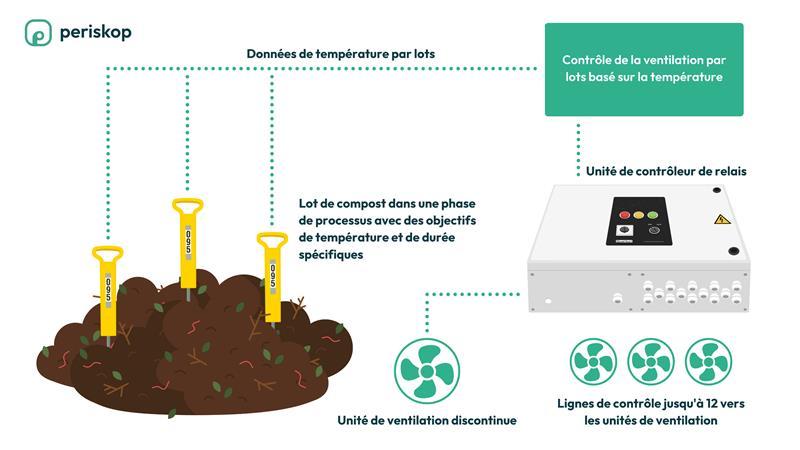
In the aerated windrow composting approach, air or oxygen is supplied to the composting windrow, either by regular turning or by installing an aeration system consisting of pipes and an air blower beneath the windrow. To improve energy efficiency, aeration can be automated using an aeration control system.
Aerobic composting is further categorized based on the aeration method used in the facility.
Process overview in windrow composting
Step 1
Receive and inspect materials, and reject loads with contaminants, for instance, weeds, chemicals, and general waste. They can be sent to landfills.
Mix inputs and form windrows.
Step 2
Reduce the size by shredding or cutting materials greater than 100mm.
Step 3
Mix inputs and form windrows with a height of 1- 3 m and a width of 2- 6 m. To achieve higher microbial activity in decomposition, a suitable C/N ratio is required, which is 30:1.
Step 4
Sanitization: Inspect and monitor temperature and moisture conditions frequently in these phases of compost production.
Step 5
Screening
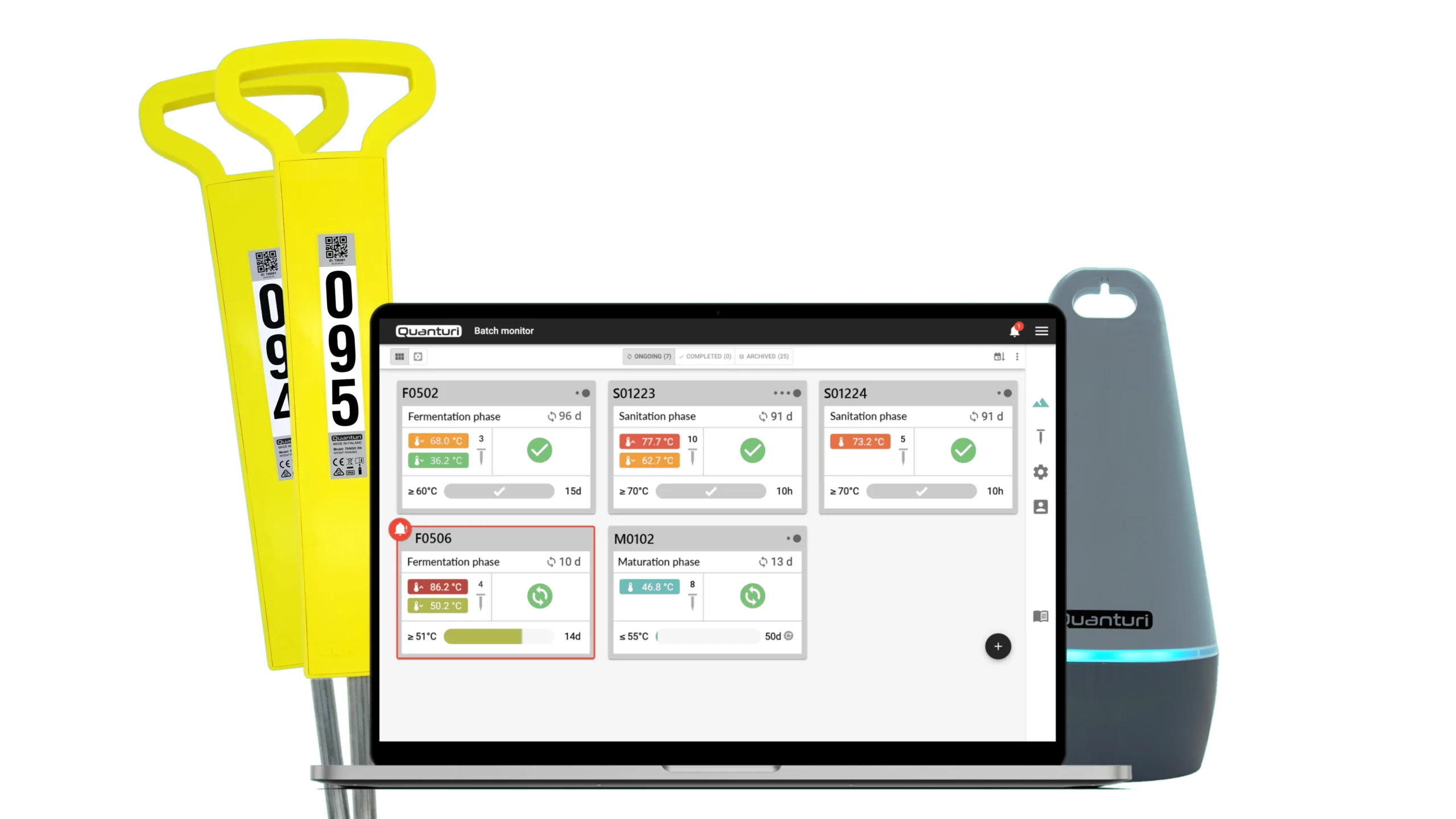
Windrow composting temperature monitoring requirement
A temperature monitoring system is mandatory, whether you choose the anaerobic or aerobic composting approach.
Why it’s important
It’s a basic compliance requirement. Maintaining a specific temperature for a set duration is essential to achieve hygienization, remove pathogens, and kill weeds in compost materials. Incomplete or unpasteurized compost, meaning material that does not reach 55°C for at least 3 days, can spread weeds to new areas. Temperature monitoring is also important to prevent composting fires due to spontaneous combustion.
Pathogens present in compost can also pose risks to human health.
Resource: Read our detailed guide on monitoring compost pile temperature.
Pathogens of concern in composting
- Viruses (e.g., hepatitis, enteric viruses)
- Bacteria (e.g., fecal coliforms, Salmonella spp., Legionella, epidermal and respiratory pathogens)
- Protozoa (e.g., Cryptosporidium, Giardia)
- Helminths (e.g., parasitic worms, tapeworms, roundworms, and flukes)
How to eliminate pathogens from compost?
- Ensure every part of the compost material is pasteurized by maintaining high internal temperatures for the required duration and regularly turning the windrow to eliminate “cold spots.”
- Implement rigorous quality assurance by testing compost for pathogens at the start of processing any new feedstock type, and whenever there are significant changes in feedstock or the process.
- Prevent re-contamination by separating equipment, vehicles, and zones used for raw feedstock from those used for treated compost. Wash all machinery thoroughly between handling untreated and pasteurized materials, and avoid applying leachate to compost that has already undergone heat treatment.
- For compost derived from high-risk sources (such as animal excreta, offal, sewage sludge), conduct frequent pathogen testing to ensure safety before application.
Windrow turning frequency
The optimal frequency depends on the rate of decomposition occurring in the windrow, whether it is slow, moderate, or fast. Under normal conditions, turning the compost every 3 to 7 days (rather than daily) is recommended to maintain proper aeration and temperature without excessive heat loss (Awasthi et al., 2014).
Composting process duration
The windrow composting process takes about 22 weeks to complete. During this process, the compost heaps are kept narrow, and the waste material is frequently recirculated to achieve effective results and remove pathogens. Food waste is regularly mixed and moved into long composting piles (windrows), each measuring 1–3 meters high and 2–6 meters wide. These compost windrows are continuously monitored to ensure compliance and maintain quality.
Facility space requirements for processing 1 tonne/day of compost
- 1 tonne/day – Requires approximately 450 m² (about the size of 1 basketball court)
- 5 tonnes/day – Requires approximately 1,500 m² (roughly 1 Olympic-sized 50m pool)
- 20 tonnes/day – Requires approximately 6,000 m² (around the size of 1 rugby field)
An additional area is needed for raw material blending, storage, processing, vehicle parking, and final compost storage.
Equipment required for windrow composting
- Compost windrow covers for rain prevention. The recommended covers are semi-permeable, facilitating airflow but repelling moisture.
- Water supply, hose with flow regulator, sprinkler/irrigator shovels
- Windrow turner
- Aeration control system comprised of fans and pipes
- Carbon dioxide probes
Windrow composting cost
The Secretariat of the Pacific Regional Environmental Programme (SPREP) reported that the capital investment for windrow composting machinery and equipment is approximately €100,000. This estimate excludes costs related to land acquisition and site preparation.
Operational Costs per Tonne
The Secretariat of the Pacific Regional Environment Programme also reports that operating costs for windrow composting typically range from €50 to €100 per tonne of compost produced.
Compost odors management
Favourable conditions for windrow composting
During composting, it is essential to maintain favourable conditions such as light, air, and temperature to ensure sufficient bacteria for the decomposition of organic material. This can be achieved through frequent turning.
References
- https://www.sciencedirect.com/topics/agricultural-and-biological-sciences/windrow-composting
- https://pacwasteplus.org/wp-content/uploads/2022/12/Windrow-Composting-Factsheet-7-1.pdf