How to monitor compost windrows?
- Record data accurately
- Understand any challenges that come up.
- Fix problems when needed
- Keep track of pile activity for regulatory review and windrow compost process validation
Compost process validation monitoring
To ensure compost is valid for sale, all critical control parameters such as temperature, moisture, oxygen levels, turning frequency, maturation, materials ratios, and retention time must be monitored and recorded. Requirements vary by country and certification system; for example, BGK in Germany, the PAS 100 in the UK, and EU or US regional guidelines.
Proper log sheets must follow local regulatory and certification standards, as they are essential for showing compliance during audits and verifying compost safety and quality.
Compost pathogens removal process monitoring
Pathogen removal in compost occurs during the thermophilic phase, where temperatures of 55–65°C (131–149°F) are maintained to destroy harmful microorganisms. Compost windrow sanitization is achieved by maintaining ≥55°C (≥131°F) for at least 3 days in in-vessel systems or ≥55°C (≥131°F) for at least 15 days with regular turning in windrow systems.
At this stage, monitor the temperature regularly and record the readings in a log sheet for compliance verification. This is the most critical phase of the entire composting process, as it determines both the quality of the compost and its approval for sale in the market.
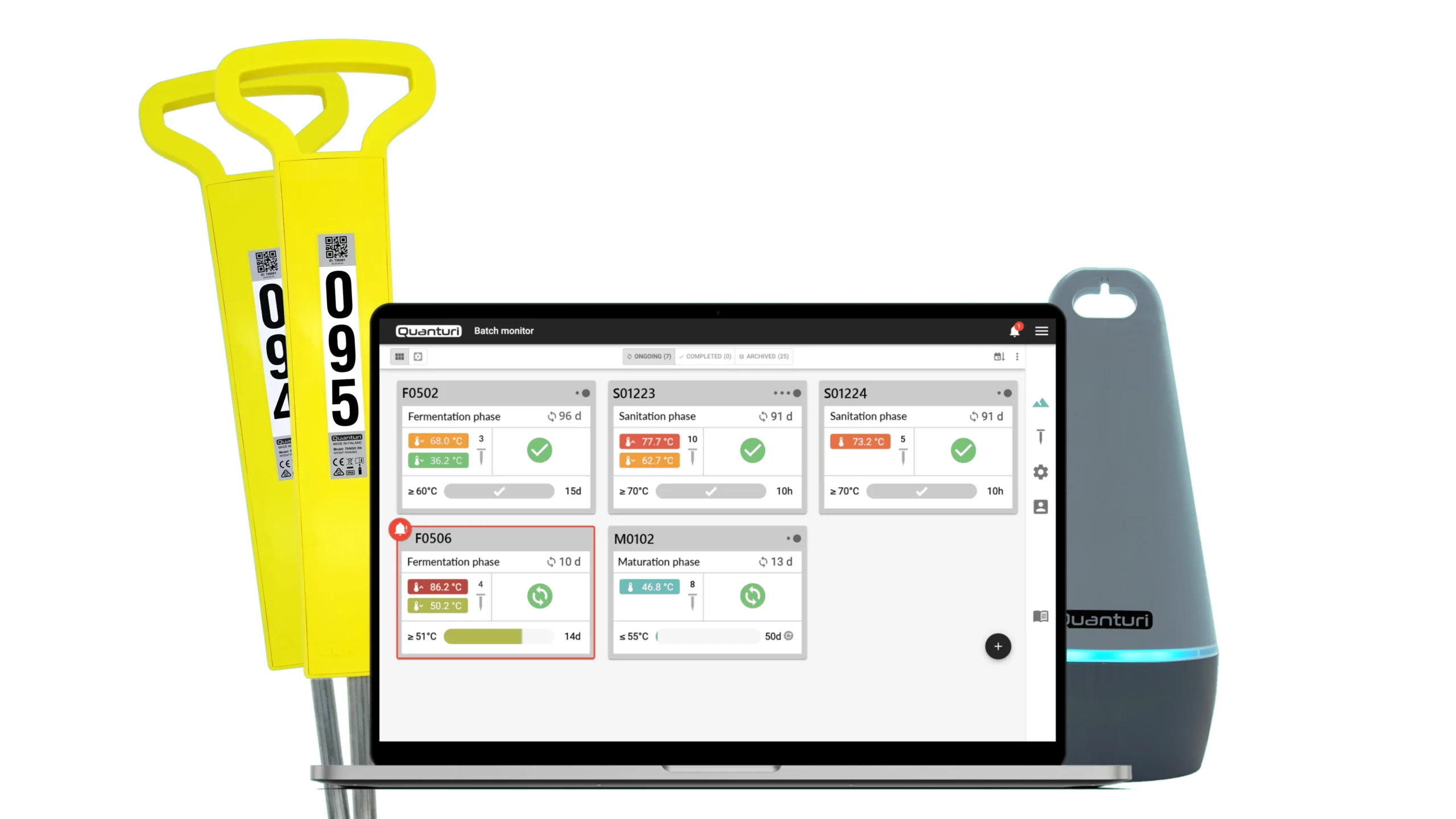
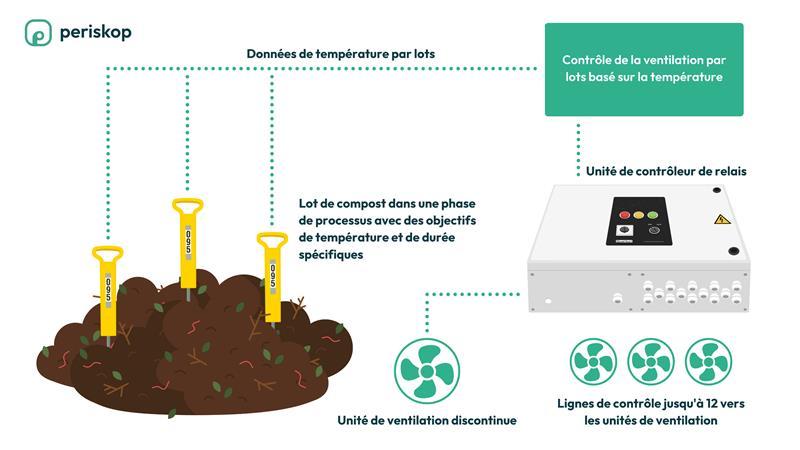
Windrow compost monitoring systems such as Periskop simplify this process by providing continuous temperature data that can be accessed remotely, eliminating the need for frequent site visits and enabling the download of compliance reports for the entire composting cycle.
How do you monitor the temperature of compost windrows?
Why monitor compost temperature?
- Is decomposition happening as it should?
- Why isn’t the pile getting hot?
- Are the probes working properly?
- When should you turn the compost?
How to fix temperature problems
- Turn the pile more often to let out extra heat.
- Add more browns, which are carbon-rich materials.
- Add water to help the microbes work better.
- Mix or aerate the pile to give it more oxygen.
What is the ideal temperature range for composting?
- If it’s below 32°C (90°F), decomposition slows down. Sanitization will not be achieved.
- If it’s above 60°C (140°F), microbes start to die.
Temperature can tell you even more about your compost.
How can you check the moisture content in a compost windrow?
- Check moisture using your senses
- If water drips out when you squeeze the compost, the moisture content is too high—about 70%.
- If the compost glistens between your knuckles, the moisture content is probably around 65%.
- If the compost holds its shape when squeezed but does not fall apart, the moisture is between 50% and 65%.
- Using smell to check moisture
- Excess moisture
- Poor aeration/oxygen
What is the best moisture level for a compost windrow?
When should you turn the compost pile?
This is a good time to turn the pile to:
- Reactivate microbial activity
- Supply oxygen through aeration
- Kill beneficial microbes
- Cause spontaneous combustion
- Lead to regulatory violations
At what temperature can a compost pile catch fire?
Pile structure monitoring
Tools required for pile structure monitoring
How to monitor compost pile structure
- Look at the overall shape of the compost pile. If the windrow is slumping or cannot hold a triangular or rounded shape, the structure may be poor.
- During the moisture squeeze test, check how dense the compost feels. Look for a mix of particle sizes (from about 1 inch down). Wood materials help improve the structure.
- Check for surface crust on the pile, as this can reduce airflow.
- Advanced field or lab tests are usually not needed unless there is an ongoing problem.
How to fix the compost pile structure
- Add bulking materials like wood chips or bark (5–10% of the mix) and reshape the pile.
- If piles are very tall (over 8 feet), consider making smaller piles.
- Note that piles naturally shrink as composting progresses. This is normal, not slumping.
- If the surface crusts, turn the pile to mix crusted material and restore airflow.
- When building or turning piles, try to avoid compacting the material.